Why Outdoor Living Projects Matter in the Ohio Market
Ohio homeowners occupy an interesting middle ground when it comes to outdoor living. With four distinct seasons, every warm-weather month feels precious, and buyers across Cuyahoga County, Summit County, Stark County, and beyond consistently tell agents that usable outdoor space ranks near the top of their wish lists. That appetite for outdoor areas makes deck and patio projects worth serious consideration, but only when you understand what you are likely to spend versus what you are likely to recoup at resale.
This is not a simple "build it and the equity will come" situation. Material choices, regional climate demands, lot size, and how a project fits the surrounding neighborhood all shape the numbers. Let's dig into the specifics so you can make a decision rooted in data rather than enthusiasm.
What Decks and Patios Typically Cost in Ohio
Wood Decks
Pressure-treated lumber remains the most common starting point for Ohio homeowners. For a mid-range wood deck of roughly 300 to 400 square feet, installed costs in the Northeast Ohio market typically run between $15,000 and $25,000, depending on complexity, railings, and contractor rates in your area. That range reflects basic rectangular builds; L-shaped or multi-level designs push costs higher.
Keep in mind that Ohio's freeze-thaw cycles are hard on wood. Footings must be dug below the frost line (generally 36 to 42 inches in most of our region), which adds labor cost. Factor in an annual maintenance budget for sealing, staining, and board replacement over time, because that ongoing spend affects the true lifetime cost of a wood deck.
Composite and PVC Decking
Composite and PVC decking products carry a higher upfront price, often $30,000 to $50,000 for a comparable mid-range project, but they dramatically reduce annual maintenance. For sellers in markets like Medina County or Portage County where buyers scrutinize condition closely, a composite deck that still looks clean and tight after several Ohio winters can be a meaningful differentiator during a home inspection or appraisal walkthrough.
Concrete and Paver Patios
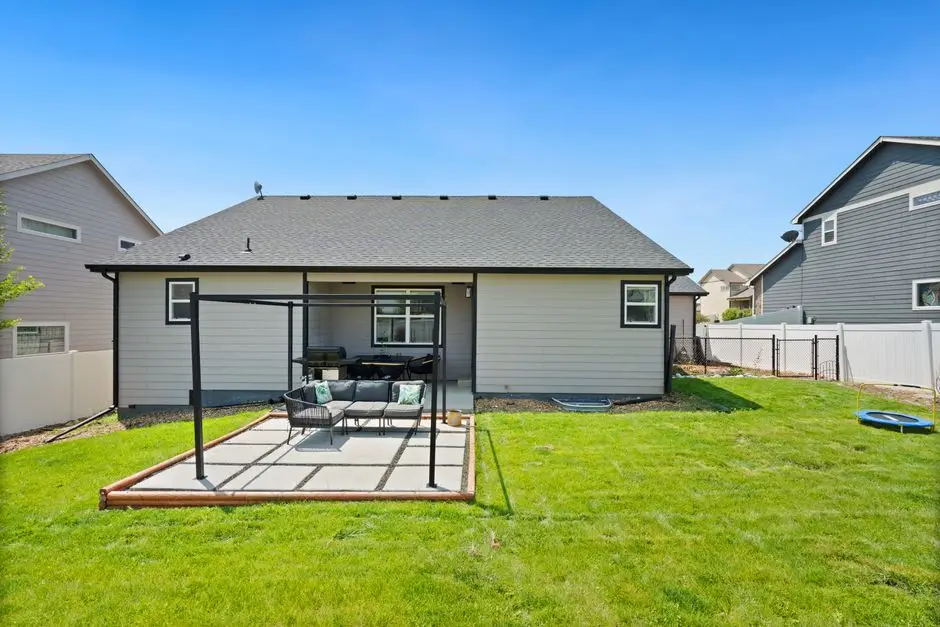
Poured concrete patios at the entry level run roughly $8,000 to $14,000 for a 300-square-foot space. Paver patios, which handle Ohio's freeze-thaw cycles well because individual pavers can shift slightly without cracking the whole surface, typically cost $15,000 to $28,000 installed. Stamped concrete falls in between and offers strong visual appeal at a moderate price point, though it can crack over time in climates as variable as ours.
Screened Porches and Covered Structures
Adding a screened enclosure or pergola structure over a deck or patio extends usable days into May and September, months that in Ohio can swing between 40 and 75 degrees within a single week. These additions typically add $10,000 to $25,000 on top of the base structure cost. For properties in Wayne County or suburban Akron, a screened porch frequently generates positive comments during buyer showings.
Resale Return: What the Data Tells Us
Remodeling Magazine's Cost vs. Value report (most recent national edition) pegs the average cost recouped on a wood deck addition at approximately 50 to 55 percent nationally. Composite deck additions tend to recover a slightly lower percentage of their higher upfront cost, often in the 40 to 50 percent range nationally. Patios historically perform somewhere in between.
What does that mean practically? A $20,000 pressure-treated deck might add $10,000 to $11,000 in assessed value and buyer appeal at resale. A $40,000 composite deck might add $18,000 to $20,000. These are general illustrations, not guarantees. Actual returns depend on local comparable sales, the overall condition of the home, and how well the project was permitted and built.
Important note: return-on-investment figures for home improvements are general estimates based on aggregated national and regional survey data. They are not a promise of a specific resale outcome. For a personalized estimate of how an improvement might affect your home's value, consult a local real estate agent who can review comparable sales in your specific market.
The Ohio-Specific Variable: Seasonality
One factor that separates Ohio from Sun Belt markets is seasonality. A deck or patio used five or six months per year rather than ten or twelve will simply carry less weight with buyers evaluating livable square footage. This is not a reason to skip the project; it is a reason to right-size it. A well-built 300-square-foot deck will likely serve you better in Canton or Cleveland than a sprawling 700-square-foot structure that feels excessive given Ohio's outdoor season.
Permit and Code Compliance Matter More Than You Think
Across Cuyahoga, Summit, Stark, Medina, Portage, and Wayne counties, building departments require permits for most deck construction. An unpermitted deck is a red flag for buyers and their lenders and can complicate or delay a sale. Some buyers will ask for a price reduction to cover the cost of retroactive permitting, and some lenders may require the issue to be resolved before closing. Always pull permits, always use licensed contractors, and keep your documentation. This is especially relevant if you are planning to sell within a few years.
Smart Project Decisions for Ohio Homeowners
Match the Project to the Home
A general principle in real estate is to avoid over-improving for the neighborhood. If the median home near you is priced around $250,000, a $55,000 outdoor living build is unlikely to return its full cost. Conversely, in higher-price markets within Cuyahoga County or Summit County, buyers may expect more finished outdoor space and will notice its absence. A local agent can help you calibrate before you commit.
Materials That Hold Up in Ohio
- Composite decking: Resists moisture and UV better than wood over time, requires minimal seasonal maintenance.
- Concrete pavers: Individual units can be reset if frost heaving occurs, avoiding full surface replacement.
- Galvanized or stainless hardware: Ohio humidity accelerates corrosion on standard fasteners; specify corrosion-resistant hardware in your contractor agreement.
- Covered roofs or pergolas: Extend usable season and protect the deck surface from Ohio's wet springs and heavy fall leaf accumulation.
Features Buyers Notice
- Built-in lighting integrated into railings or stairs, which makes the space usable at dusk.
- A dedicated space for a grill with direct access from the kitchen door.
- Low-maintenance railings (aluminum or composite) rather than wood balusters that require painting.
- Steps that connect to the yard rather than ending abruptly above grade.
- No-step entry points from the home's interior to the deck surface, a feature that broadens the home's appeal without limiting it to any specific group of buyers.
Thinking About This in Today's Market Context
The broader housing market context is relevant here. As of November 2026, the average 30-year fixed mortgage rate was around 7.11 percent according to Freddie Mac, and the national median home sales price was $393,300 as of the third quarter of 2026 per the National Association of Realtors. At those financing levels, buyers are cost-conscious and scrutinize condition and value more carefully than they might in a low-rate environment.
That dynamic works in two directions for sellers considering a deck project. On one hand, a genuinely well-built, permitted outdoor space can help a listing stand out when buyers are being selective. On the other hand, buyers at higher price points have less room to absorb an overbuilt project that inflated the asking price beyond what comparable homes support. The sweet spot is a project that is well-executed, properly permitted, and appropriately scaled for the home and local market.
If you are buying a home and evaluating a property that already has a deck or patio, it is worth asking your agent to request documentation of the original permit and final inspection. You can also check with the local building department directly. This is a simple step that can save significant headaches after closing.
For a broader sense of what properties are available across the region, you can browse current Ohio listings to see how outdoor spaces are featured across different price points and neighborhoods.
Planning Your Project: Practical Next Steps
Before you finalize a project scope, here is a practical checklist:
- Get at least three written bids from licensed, insured contractors with verifiable Ohio references.
- Confirm permit requirements with your local building department before signing any contract.
- Ask your contractor to specify frost-line footing depths for your specific county.
- Review your HOA covenants if applicable, some communities in Summit or Medina counties restrict deck finishes, colors, or sizes.
- Consult a tax professional about whether the improvement affects your property tax assessment or qualifies for any applicable deductions. This is general information only; individual tax situations vary and require professional guidance.
- Use our mortgage calculator if you are considering a home equity loan or home equity line of credit to finance the project. Rate and payment estimates are general and illustrative; speak with a licensed lender for terms that apply to your situation.
Know What Your Home Is Worth Before You Build
One of the most common mistakes Ohio homeowners make before a remodel is not knowing their home's current market value. If you are approaching the top of what comparable homes support in your zip code, an expensive outdoor project may feel rewarding to build but underperform at resale. Getting a solid baseline through a comparative market analysis before you commit is a low-effort step with significant upside.
Our team serves buyers and sellers across Cuyahoga, Medina, Portage, Stark, Summit, and Wayne counties and understands how outdoor improvements factor into real local sales. Whether you want to understand your home's current value before renovating or you are ready to explore listings that already have the outdoor space you envision, we are here to help. Visit our home value estimator to get started, or learn more about our team and how we work with homeowners throughout Northeast and Central Ohio.