
What a 6.67% Mortgage Rate Really Means for Ohio Buyers and Sellers
Mortgage rates and home prices share a complicated relationship, and nowhere is that dynamic more interesting than in Northeast Ohio. The national average 30-year fixed mortgage rate currently sits at 6.67%, while the national median home sales price hovers around $410,700. Yet here in Ohio, the median active listing price is just $190,000, less than half the national figure. That gap tells a story worth understanding, whether you're buying, selling, or simply watching the market.
Interest rates influence purchasing power directly. When rates rise, monthly payments on a given loan amount increase, which can push some buyers to the sidelines or prompt them to search at lower price points. When rates fall, purchasing power expands and competition for available homes typically intensifies. As of August 2026, the market across counties like Cuyahoga, Summit, Stark, Medina, Portage, and Wayne is navigating this rate environment in ways that differ meaningfully from what national headlines suggest.
Ohio's Affordability Advantage in a High-Rate Environment
One of the most important facts to grasp about the current Ohio market is that the state's price structure offers a buffer that many other parts of the country simply do not have. A 6.67% rate on a $190,000 home produces a very different monthly payment than the same rate applied to a $410,700 national median. That relative affordability is one reason Ohio continues to see meaningful transaction volume even as higher rates have slowed markets in more expensive regions.
Consider the raw numbers: Ohio recorded 4,915 closed sales in the last 30 days against a backdrop of 12,440 active listings. Homes are averaging 74 days from listing to close over the past 90 days. This is not a frozen market. It is a measured one, where buyers are taking a bit more time to evaluate their options and negotiate carefully, but transactions are still happening at a steady pace.
Ohio's median active listing price of $190,000 means that even at the August 2026 rate of 6.67%, buyers in markets like Canton, Akron, and Wooster are working with monthly principal and interest figures that remain far more manageable than the national average. Always use a mortgage calculator and speak with a licensed lender to determine figures specific to your situation, as rates and payments will vary.
How Rate Sensitivity Varies Across Northeast Ohio Counties
Not every county in Northeast Ohio responds to rate changes in the same way. Price points, inventory levels, and local economic conditions all shape how rate movements translate into buyer behavior and, ultimately, home values.
Cuyahoga and Summit Counties: Urban Core Dynamics
In Cleveland and Akron, higher rates have encouraged more buyers to focus on walkable, lower-maintenance properties where lower price points partially offset financing costs. Cuyahoga County's diverse inventory, ranging from affordable urban neighborhoods to more substantial suburban properties, means buyers at different income levels are all active, though each segment responds to rate changes differently. Summit County similarly reflects a blend of price points, with properties near Akron's core moving differently than those in outer suburban areas.
Stark County: Stability at Accessible Price Points
Canton and the broader Stark County market have historically attracted buyers precisely because price points are among the most accessible in Northeast Ohio. In a higher-rate environment, that affordability cushion becomes even more valuable. Buyers who might be priced out of more expensive submarkets often turn to Stark County, which can sustain demand even when rates climb.
Medina, Portage, and Wayne Counties: Suburban and Rural Considerations
Medina County sits at an interesting intersection: close enough to both Cleveland and Akron to attract buyers who work in those metro areas, yet offering more space and lower density. When rates rise, some buyers recalibrate their square-footage expectations. Medina's inventory provides options across a range of price points, which helps it maintain activity. Portage County, anchored in part by the Ravenna and Kent areas, benefits from a similar suburban appeal. Wayne County, home to Wooster and a strong agricultural economy, tends to attract buyers seeking rural and small-town settings at prices where rate sensitivity is somewhat moderated by the overall lower loan amounts involved.
The Lock-In Effect: Why Inventory Remains Tight
One of the most significant ways elevated mortgage rates are shaping the Ohio market as of August 2026 has nothing to do with prices directly. It has to do with seller behavior. Many current Ohio homeowners secured mortgages at rates of 3% to 4% during 2020 and 2021. Moving to a new home today would mean taking on a new mortgage at or near 6.67%, which represents a substantial increase in monthly carrying costs. This dynamic, often called the rate lock-in effect, is a key reason why active inventory across Northeast Ohio, while improving compared to the extreme lows of 2021 and 2022, remains below pre-pandemic historical norms in many submarkets.
The practical result is that Ohio's 12,440 active listings are supporting solid transaction volume, but sellers with well-priced, well-maintained properties are still operating from a position of relative strength. Overpriced listings, however, are sitting longer as buyers at today's rates do their math carefully and are less inclined to stretch.
What Buyers Should Know Right Now
- Get pre-approved before you browse. At 6.67%, knowing your exact budget before you start touring properties in Medina, Portage, or Cuyahoga counties is more important than ever. Use our mortgage calculator as a starting point, then connect with a licensed lender for your specific figures.
- Consider total cost of ownership. Property taxes, insurance, and HOA fees all factor into your true monthly cost. Ohio's property tax structure varies by county, so understanding local millage rates matters.
- Don't wait for a perfect rate. Rates are difficult to predict, and Ohio's home prices, while still below national averages, have appreciated. Waiting for a significant rate drop may mean competing in a more crowded market at higher prices if and when rates do decline.
- Negotiate thoughtfully. With an average of 74 days to close, buyers today have more room to negotiate than during the peak frenzy of recent years. Inspection contingencies, seller concessions toward closing costs, and price adjustments on stale listings are all worth pursuing with a skilled agent on your side.
What Sellers Should Know Right Now
- Pricing accuracy is critical. Buyers at today's rates are running detailed affordability calculations. An overpriced listing will sit. Get a professional comparative market analysis before you set your price. You can start with our home value estimator to get a baseline sense of where your home stands.
- Condition matters more than it did in 2021. When buyers were waiving inspections and paying over asking price, condition was less of a differentiator. Today, move-in-ready properties command premiums while those needing work face steeper discounts.
- Marketing reach is essential. With 12,440 active listings in Ohio, your property needs maximum exposure. Professional photography, strong online presence, and strategic pricing are non-negotiable.
- Consider the math of your next move. If you're also buying, talk to a licensed lender about bridge loans, contingency strategies, and other approaches to managing the transition from one rate environment to another.
Looking Ahead: Rate Trends and Ohio Home Values
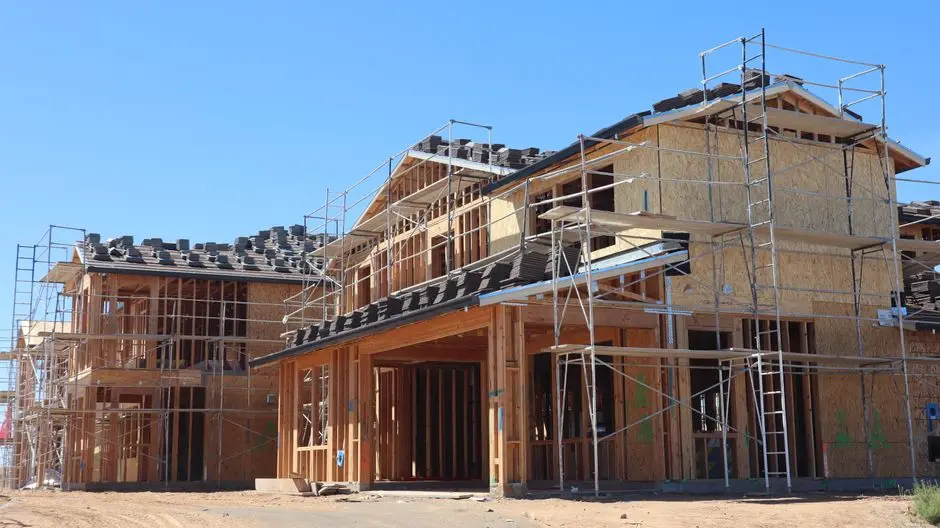
National housing starts came in at approximately 1.427 million units with building permits at around 1.367 million, suggesting that new construction is continuing at a measured pace. In Northeast Ohio, new construction activity varies considerably by county. Medina and Stark counties have seen more suburban development, while urban core areas in Cuyahoga and Summit counties focus more on rehabilitation and infill projects. As new supply comes online gradually, it will add to buyer options, but is unlikely to flood the market given the financing costs that builders themselves face.
General consensus among economists, noted here for informational purposes only and not as a guarantee or prediction, suggests that mortgage rates may see modest movement in either direction over the coming year as inflation and Federal Reserve policy continue to evolve. Buyers and sellers are encouraged to consult with licensed financial and real estate professionals for guidance specific to their circumstances, as general market trends do not guarantee individual outcomes.
What is clear is that Ohio's relative affordability compared to national benchmarks continues to position the state as a market where transactions remain viable even in a higher-rate environment. The spread between Ohio's $190,000 median and the national $410,700 median is not just a data point. It is a competitive advantage for the region.
Work With a Local Expert Who Knows These Markets
Interest rate impacts are not uniform. They play out differently on a street-by-street, neighborhood-by-neighborhood, and county-by-county basis across Northeast Ohio. Whether you're searching for homes in Summit County, considering a listing in Stark County, or evaluating your options anywhere across Cuyahoga, Medina, Portage, or Wayne counties, working with an agent who understands these local dynamics makes a measurable difference. Explore current listings and browse available properties on our property search page, or contact our team to discuss your specific situation. The market is moving. The right information and the right guidance help you move with it.